Monday, October 5, 2015

Palaeo-Editorial: Why common arguments against feathering large tyrannosaurs are flawed

This is sort of a followup to a note I made on my first post, but you don't need to see that to understand this.

Basically, there's a number of common arguments as to why feathering animals like Tyrannosaurus makes no sense, and a lot of them are logically flawed or downright incorrect. This post is to try and lay out why these are incorrect without simply saying they are.

First off, the most common reason;
"They were too big to have feathers, it'd make them overheat!"
This is particularly weird, as it's often paired with comparisons to modern-day elephants and rhinos, which immediately brings up a glaring flaw; the animals have nothing in common in terms of body shape. Elephants have a highly-concentrated surface area; this is because...well, they're basically giant squares on legs. They're thick and dense as well as big, which is why they reduced their integument. Same applies to the rhinoceros; it's a walking rectangle, essentially.

By contrast, Tyrannosaurus had a much higher surface area because of it's large, long tail, meaning it has less to worry about when it comes to heat. Also, feathers have been proven multiple times to be a better thermoregulatory structure than hair, so the comparison fails in that regard, too. Even if they didn't have any feathers (which is unlikely), they'd be looking more like plucked chicken than an elephant's hide.
Above: What a featherless Tyrannosaurus would more likely look like. Not exactly scarier, is it?
 
Basically, DO NOT USE LARGE MAMMALS FOR YOUR DINOSAUR THERMOREGULATORY COMPARISONS. THIS IS A BAD IDEA AND IT'S INACCURATE. Mammals and dinosaurs have extremely different thermoregulatory systems, so comparing them directly is not accurate. A more logical comparison would be crocodilians and birds, both being the closest living relatives to any dinosaur. However, birds are preferable to crocodiles; as they are closer in niche to most dinosaurs.

....ahem. Anyways, onto the next point!

         "Feathers are lame, I don't see birds as being scary!"
Nope, not scary. Totally not scary at all. (Credit goes to FredtheDinosaurman on DeviantArt for this lovely image!)
I've always seen this argument as particularly dumb, as it's entirely bias. Feathers do not make something less scary, that's just flat-out idiotic. It's like if I said grizzly bears were dumb because they were all poofy and not naked, slimmed-down beasts when one came barreling towards me. You aren't going to give a crap about what the T.rex bearing down on you is covered in, you're going to run like hell regardless because it's A GIANT ANIMAL TRYING TO EAT YOU. That's natural instinct.

Besides, who says everything predatory has to be scary? Look at how popular the potoo has gotten, and it's a predator who look like THIS;
This is the face of a real American hero. Just without the Texas government sort of erupting from it's brain like a horrific tumor. (Thanks to GravityKitty on imgur for the image!)
That's the opposite of scary, and yet people love it anyways; so why are people so adamant about not feathering tyrannosaurs? Well, there's another reason that comes up a lot for that...
Science ruined dinosaurs! First they say Brontosaurus and Triceratops don't exist, now they're trying to destroy the awesome theropods!
First, you're actually wrong about Brontosaurus not existing, and Triceratops was never in danger of being sunk into another genus (Torosaurus was the one proposed to be sunk into Triceratops), and second of all, there's no reason everything needs to look awesome to be awesome. This is commonly known as the "awesomebro" argument, as it entirely hinges on the idea that dinosaurs need to look scary to sell; an idea unfortunately regurgitated by Hollywood. This is, of course, a dumb argument that hinges on opinion, but the real kicker is saying that featherless theropods aren't awesome.

Fun fact; a featherless Velociraptor can't climb a vertical wall. A featherless Velociraptor doesn't have the ability to use Raptor Prey Restraint and eat it's prey alive. These are all awesome traits that the leathery raptors of the early 1990's simply cannot physically do, but modern feathered ones can. We've only made even more awesome discoveries about dromaeosaurs once we figured out they were all feathered. Sure, they aren't popping open doors to devour screaming children, but the idea of a Utahraptor climbing a tree by simply walking up it and flapping it's wings is even scarier...especially once you take into the account the fact that dromaeosaurs were no slouches in the bite department; in fact, the eponymous genus of the family, Dromaeosaurus, has a very reduced "sickle" claw and instead has very robust jaws, suggesting that it was not using RPR as much as other dromaeosaurs, and instead just used it's powerful jaws to kill it's prey by snapping their necks or skulls.

But honestly, Tyrannosaurus ripping the heads of Triceratops corpses off is awesome, no matter what integument it's covered in. Awesomeness is subjective, anyways, so this is also an opinion-based argument.

But this only really brings up an important flaw; the public perception of dinosaurs. The media does little to help, but when what Joe Shmoe thinks is over a decade behind what the scientists know, that isn't just being inaccurate anymore; that's closer to misinformation.

We're hitting what many people are calling the "Soft Dinosaur Renaissance"; a point in which many fossil discoveries completely change the way we look at dinosaurs. First it was colors in feathered dinosaurs, then it was feathery tyrannosaurs that were 30 feet long, then it was dodo-like dromaeosaurs, then it was herbivorous tetanurans, then it was bat-winged dinosaurs. Keep in mind, all of these were found in the last 6 years! These animals are the sort of things that Dougal Dixon would have thought up in his lunch break, but they're quite real, and definitely prove dinosaurs were, and indeed still are, an enormously strange group of animals.

And honestly, isn't oddity so much more engaging than yet another cheap scare? We're naturally drawn to the bizarre and strange; it's why cryptozoology is such an easy field to enter. So if we like the unusual, why is it that people are against feathered tyrannosaurs?

Because people also like their childhoods. This is the same idea as what causes, say, a Transformers fan to cry "Ruined FOREVER!" when they sees something they don't like in the franchise; they're attached to their childhood nostalgia and don't want it to be "replaced". Same thing with feathered dinosaurs; people don't want feathered dinosaurs to "replace" the scaly ones they were fond of, and so they adamantly try to defend their nostalgia. However, their fight may be futile; as future generations become more exposed to feathered dinosaurs, that view will become the new "normal", and scaly theropods become the new tripodal theropods. This is inevitable as long as children are exposed to feathered dinosaurs in media.

Complaining does absolutely nothing, because science has already heard your complaints; and it doesn't care. As an ever-evolving medium, science cannot backtrack to when convenient. And it is no longer convenient to backtrack to the early 1990's.

Saturday, October 3, 2015

Happy 110th Birthday, T. rex!

Cast of Tyrannosaurus rex "Stan"
Photo by the author, courtesy Natural History Museum of Los Angeles County


In 1892, American Paleontologist Edward Drinker Cope discovered the remains of what was then the largest predatory dinosaur ever known. It was not until a decade and three years later, on October 2nd, that the dinosaur would be properly described and be given the fear-inducing name that has been etched into the minds of every four-year old: Tyrannosaurus rex. The tyrant lizard king. Just one look at the creature is enough to convey images of a bloodthirsty monster chasing down terrified prey. 

Of course, since then, our knowledge of the "King of the Dinosaurs," has drastically improved. Like most large predators, it hunted only when need be, and preferred meals that didn't fight back - carcasses. Numerous discoveries paint a complex family tree, which include lookalikes like Albertosaurus, and lesser known theropods such as Stokesosaurus. From other tyrannosaurids and tyrannosauroids can we deduct what the lifestyle of such a fearsome creature was like. Albertosaurus and Daspletosaurus bonebeds point to a more social lifestyle for T. rex - was it possible the tyrant king lived in families, using numbers to take down Trikes and duckbill dinosaurs? More recent discoveries suggest Tyrannosaurus was covered in a feathery down. It's a heated debate that remains unresolved, but such questions are what Paleontologists crave for.

Dinosaur Paleobiology - Speculative image of Tyrannosaurus hunting in gangs to bring down a Triceratops
Image Credit: Gregory S Paul

Many question the time spent studying T. rex. Besides Coelophysis, no theropod dinosaur has been as well researched. Heavyweights Spinosaurus, Carcharodontosaurus, Giganotosaurus, and possible Mapusaurus have claimed the title of biggest land carnivore ever, a title previously held for more than 50 years by T. rex. Ultimately, however, Tyrannosaurus represents more than an over-studied rock. For many, including me, T. rex is a reminder of a childhood much like the Cretaceous in that it is lost forever in time. The dinosaur lures the enthusiasts into the exciting world of Paleontology. Most importantly, T. rex serves as an inspiration for young minds all around the globe to contribute to science. And that is why Mr. rex will hold a special place in my heart unlike any other dinosaur. 

Happy 110th birthday, T. rex!

CM 9380 - The holotype specimen of Tyrannosaurus rex
Image credit: Thomas Holtz Jr.


Saturday, September 19, 2015

Another Dinosaur Field Guide!?

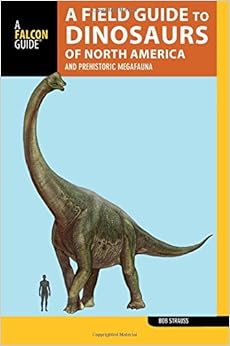
The date: September 12, 2015. The place: Barnes & Noble. It was another ordinary day of browsing the science section in hopes of finding new books. Fortunately, I sacrificed time and took the initiative to take an extra-long drive to a Barnes & Noble I usually don't frequent. Lo and behold, their Paleontology section had other books besides Dinosaurs: The Grand Tour and DK's Prehistoric Life!  Of most interest to me was A Field Guide to Dinosaurs of North America (And Prehistoric Megafauna), written by Bob Strauss. 


First, a little information about the author. Quoting the back cover, "Bob Strauss is the author of two best-selling question-and-answer books that range across the expanse of science, biology, history and culture: The Big Book of What, How and Why (Main Street, 2005) and Who Knew? Hundreds & Hundreds of Questions & Answers for Curious Minds (Sterling Innovation, 2007)." It also goes on to say that Strauss is the "dino-expert" for About.com. I haven't visited that site in awhile now, so I can't vouch for accuracy/reliability, but I encourage readers to see for themselves how much credibility it establishes Strauss. 

In my last book review, I covered Henry Gee's A Field Guide to Dinosaurs (read it here), and so I'll address the big question, "What are the differences between both books?" Aside from the obvious stuff, like different authors and illustrators, Strauss' book provides actual, factual information in each dinosaur profile, making for much less speculating on his part, but more for the reader, who must separate fact from fiction. Additionally, Strauss takes a more humorous tone on the subject matter, much like Robert Mash's book, How to Keep Dinosaurs. Finally, Strauss covers other prehistoric fauna, and not just the dinosaurs. More on that later.

As far as the writing goes, it's standard. There's plenty of comical scenarios Strauss manages to express vividly, such as how an Albertosaurus ambush would go down. It's a controversial opinion, but I believe that his attempts to bring scientific info into the writing downplays the potential he had. The idea itself is fine, but the execution is sub-par. It's the same old information that many, many other dinosaur books have stated. And some of it is just plain wrong. Note to the author: Acrocanthosaurus and Spinosaurus were NOT "closely" related (think of it this way, you wouldn't call a dog and a manatee "closely" related). Same physical features =/= closely related. It's clear that Strauss is an enthusiast, and not a scientist. What I did like, though, was the 40+ prelude. Strauss explains the inaccuracy of movies and even nature documentaries (you know those awesome documentaries you watched as a kid that had clips of harpy eagles swooping down and carrying off lion cubs? Fake. Did ya really think the camera happened to be rolling at the right place, at the right time?), and how it has created a severe misrepresentation of dinosaurs. The fact of the matter is, dinosaurs are animals, not monsters, and nine times out of ten, predator vs prey engagements end without any blood shed. I'd have to agree, and Strauss does a superb job describing the problem. My favorite quote, "If you're going to take a dinosaur trip to purely watch monsters fighting, be kind to yourself, go to your man cave, and watch an episode of Jurassic Fight Club instead." Brilliant.

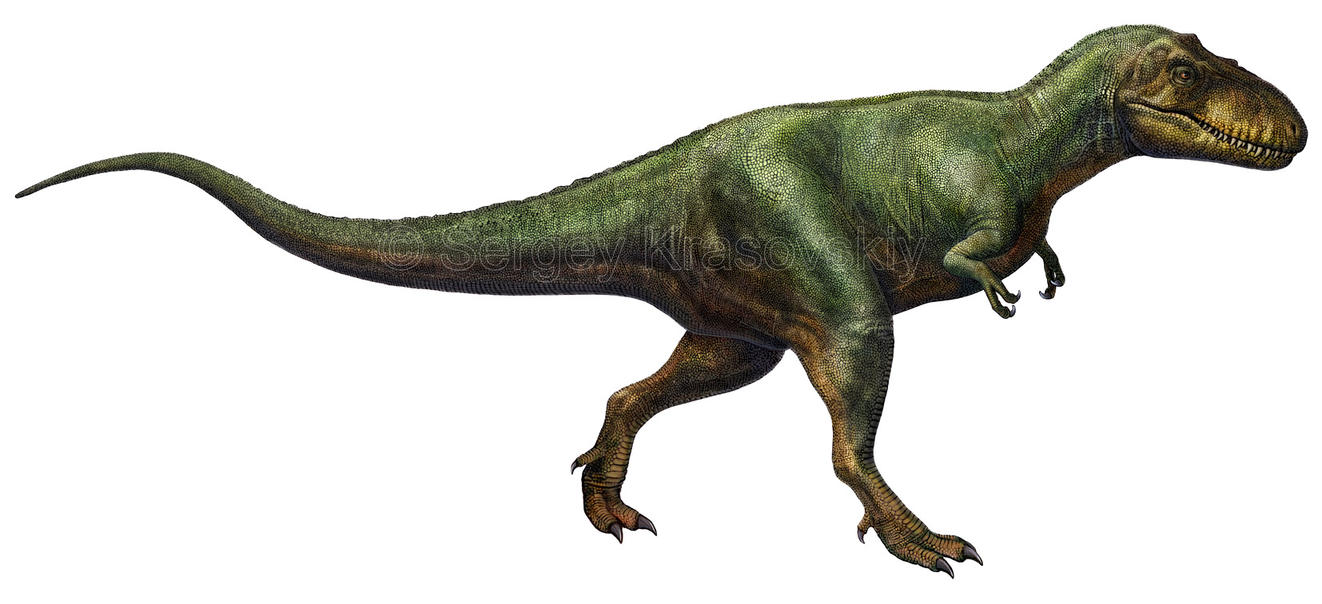
Bistahieversor 

Each illustration is provided by Sergey Krasovisky, a rather underrated paleo-artist. Oddly, they decided to use his older work. Most of the ornithischian dinosaurs are drawn fairly accurate (he gets ceratopsid feet right!), save for a few hadrosaurs in the classic tail-dragging pose, but theropods don't get it as easy. A bulk of them are depicted with "bunny-hands," and those that should be feathered like Utahraptor, are not. The biggest problem? It contradicts Strauss' writing. The worst offender being Strauss spending an entire paragraph chastising Jurassic Park for having over-exaggerated, "lizards adorned with green scales instead of feathers" (direct quote) when describing Deinonychus, only for the illustration to be... a featherless raptor with green scales. Yup. I'm not kidding. (Even Krasovisky calls it a retro depiction on his DeviantArt! I know for a fact he has a newer, albeit under-feathered restoration of Deinonychus) A bit disappointing to see that they opted not to use Krasovisky's beautiful action shots, too. 


A happy looking Euoplocephalus

Prehistoric fauna such as Dimetrodon and Smilodon are given some of the spotlight. It's nice to see non-dinosaurs, but what was the point? It would make sense if a lot more non-dinosaurs were featured, but as is, they only make up 5-10% of the book. It just feels bizarre to throw in a few random mammoths in your dinosaur book; it just causes more confusion.


There's a pretty big flaw, and it's the price. For what it is, it's not cheap. Retail price goes for 22.95 US dollars. Essentially, what you're getting is a mini dinosaur encyclopedia with less writing than what looks say (the font is fairly large, and most profiles are two-pages long). The illustrations are nothing special. No landscapes. No action shots. At most, I'd think this should go for $15.

Verdict

As a humorous book, it is a good read. Unfortunately, readers will learn very little from Strauss' book, and more often than not, will notice very obvious inaccuracies.If you're going to buy it, just remember that it most likely will not prove a reliable source. At least it covers its material far better than How to Keep Dinosaurs did.